

16
Mar 2026
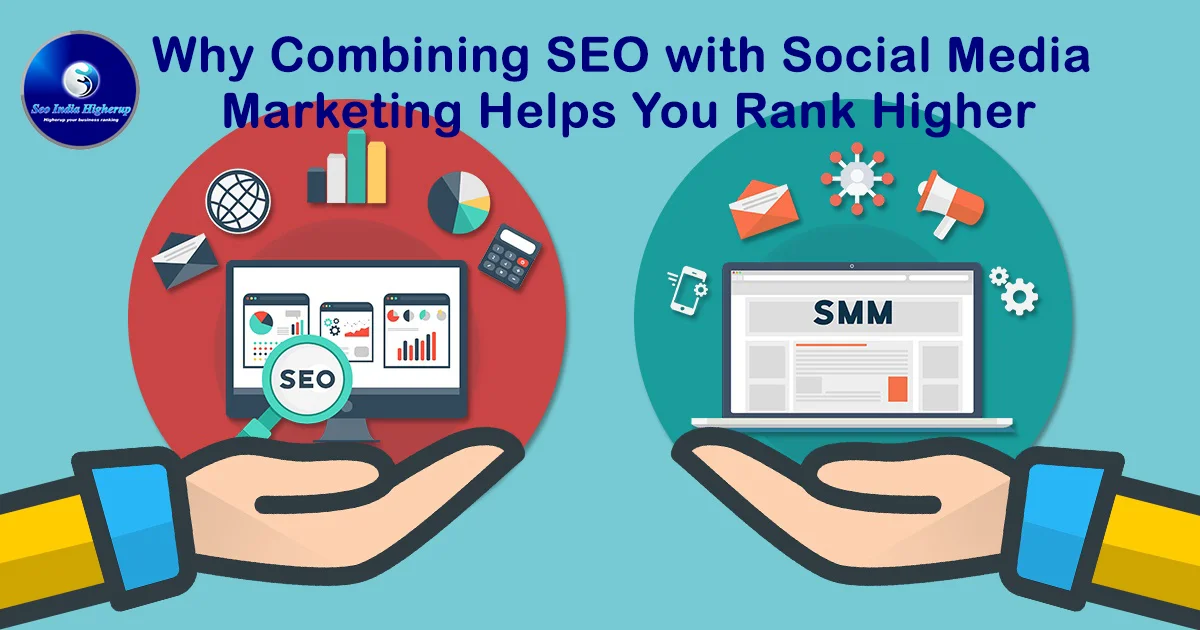
The question of whether social media has a direct impact on search engines has been debated over the years by marketers. Google has consistently claimed that likes or shares are not direct ranking factors. However, when brands take over social media, they are also likely to take over in the search results.
This isn’t a coincidence.
SEO and social media marketing touch upon the same ecosystem: content discovery, audience engagement, and brand authority. The combination of the two channels brings a compounding effect that improves visibility, traffic, and eventually search rankings.
In contemporary digital marketing, it is wrong to view both SEO and social media as two distinct strategies. Brands that have the best success are those that leverage social platforms as the distribution engine of SEO content and convert social engagement into search visibility.
This is why combining SEO and social media marketing can make you rank higher.
Social Media Accelerates Content Discovery
The discovery of new content within a short time is one of the largest difficulties in SEO. Not every blog post will be instantly discovered by search engines or even the users.
This is addressed by social media.
By sharing content on such platforms as LinkedIn, Twitter (X), or Facebook, the content instantly becomes more visible to more people. This exposure promotes premature traffic indicators that may assist the search engines in being aware that the content is pertinent and worthy of indexing.
More importantly, social media is a content amplification mechanism. Social sharing exposes your content to thousands of potential readers rather than waiting to gather slow search traffic over time.
Such an early interaction can speed up the whole SEO process of a page.
Social Distribution Increases the Probability of Backlinks
Backlinks are still one of the most powerful ranking factors in the Google algorithm. Nevertheless, one of the most difficult aspects of SEO is getting quality backlinks.
Social media will give you a better opportunity to receive these links.
Once a piece of content spreads on social media, bloggers, journalists, researchers, and industry professionals will notice it and possibly cite it in their work. This provides a natural way of acquiring backlinks.
Imagine social media as the distribution layer of your link-building strategy.
Even great content may be hidden without promotion. However, when it is distributed extensively on social media, the same piece of content stands a significantly better chance of being located and referred to.
That is, social media does not generate backlinks per se, it generates the prerequisites under which backlinks can occur.
Social Engagement Builds Brand Signals Google Pays Attention To
The contemporary SEO is no longer merely about keywords and links. Brand authority and trust are gradually becoming prioritized by search engines.
When individuals continuously come across your brand through social media, engage with your content, and seek your company by name, it generates high brand signals.
These signals include:
- Branded search volume
- Direct traffic
- Brand references online.
- Interaction with branded content.
Search engines take these as signs of relevance and credibility.
Indicatively, when users often search the brand after viewing it on their social media, Google understands that the brand is already trusted and has real-life exposure. With time, this will have a positive impact on brand positioning in search results.
Concisely, social media assists in the creation of the digital reputation layer that contemporary SEO is becoming more and more dependent on.
Social Media Provides Real-Time Content Feedback
The instant feedback loop of social media stands out as one of the most underestimated advantages of this technology to SEO.
Classical SEO may take weeks or months to work. Social media, on the other hand, shows audience reactions almost immediately.
You can quickly identify:
- What subjects produce the greatest interest?
- What are the clickbait headlines?
- What content appeals to your audience.
These can be taken to inform your SEO strategy.
As an example, when a given topic is doing exceptionally well on LinkedIn or Twitter, it could be a strong indicator that people are interested in the topic. It can then be extended to long form SEO content, pillar pages or resource guides.
So, social media is sort of a testbed of SEO content ideas.
Rather than making assumptions about what people want to read you can utilize social engagement data to inform your content strategy.
Social Platforms Extend the Lifespan of SEO Content
Most marketers believe that their content will be supported by SEO traffic alone. In practice, organic traffic can be not just slow to grow, but can also level off.
Social media assists in the longevity of SEO content.
One blog post can be reused in several social formats:
- LinkedIn posts
- Twitter threads
- Instagram carousels
- Short-form videos
- Infographics
Each of these formats reminds new audiences of the initial content.
This strategy transforms one SEO article into a multi-channel piece of content that keeps the traffic and interactions rolling.
Rather than spending the rest of the time trying to optimise your search engine, social media makes sure that your content stays long after the publication.
Social Profiles Strengthen Your SERP Presence
The other benefit of using social media that you should not ignore is its influence on your search engine results page (SERP) footprint.
When a person is searching for your brand, Google often shows social media accounts in addition to your site.
These profiles may contain:
- Twitter (X)
- YouTube
Optimizing social profiles assists you in gaining control of more real estate on the search results page.
This makes it more likely that users will use one of your properties or results rather than a competitor’s property.
It further enhances the credibility of your brand because it demonstrates a presence in various platforms.
Social Media Drives Qualified Traffic
Social media traffic may also have an indirect impact on SEO.
Having them arrive on your site via social media and interact with your content can enhance some of the more important behavioral metrics, including:
- Time on page
- Pages per session
- Returning visitor
These measures assist the search engines to know whether your content meets the user intent.
When visitors do not leave as soon as they visit your content, it means that the page brings value.
This may eventually help in better organic rankings.
The Real Power Lies in Integration
The biggest mistake marketers make is treating SEO and social media as independent strategies.
In reality, the most effective approach is content-led integration.
A strong integrated workflow looks like this:
- Conduct keyword research to identify search demand.
- Create high-quality SEO content targeting those topics.
- Promote the content aggressively on social media.
- Use social engagement data to refine future SEO content.
- Repurpose high-performing articles into social formats.
This creates a continuous feedback loop where SEO and social media strengthen each other.
Instead of working in silos, they function as a unified growth engine.
SEO assists individuals in locating your content in the search engines. Social media enables you to share your content with people who would never have even searched in the first place.
When added together, they enhance the strengths of each other.
Social media expedites content discovery, gives more chances to find backlinks, develops brand authority, and offers usable insights into the audience, which better SEO strategy.
In a more competitive digital environment, it takes more than technical optimization to be ranked higher in search results. It needs exposure, interaction, and trust, which social media allows to build.
Companies that combine SEO and social media marketing do not merely outrank. They create better digital ecosystems that are attracting traffic, authority, and long-term growth.


Why Combining SEO with Social Media Marketing Helps You Rank Higher